
How Much Does Commercial Fire Alarm Installation Cost in Long Beach? (2026)
A commercial fire alarm system is not optional for most Long Beach businesses — it’s required by California Fire Code and the City of Long Beach Building Department. But beyond compliance, a properly designed and installed fire alarm system is one of the most important investments a business owner can make in protecting employees, customers, and property.
This guide covers honest 2026 pricing for commercial fire alarm installation in Long Beach, what California and Long Beach code actually requires, and what drives the cost up or down for different types of businesses.
Is a Commercial Fire Alarm System Required for Your Long Beach Business?
The short answer for most businesses is yes. Here’s what triggers the requirement under California Fire Code and City of Long Beach regulations:
Occupancy type — restaurants, retail stores, offices, medical facilities, warehouses, and most commercial occupancies above a certain square footage are required to have fire alarm systems. The specific threshold depends on occupancy classification and square footage.
Building age and renovations — older Long Beach commercial buildings that predate modern fire code may not have compliant systems. When a building undergoes significant renovation or change of occupancy, bringing the fire alarm system up to current code is typically required as part of the permit process.
Number of occupants — buildings with higher occupant loads have more stringent alarm requirements, including more detection devices, manual pull stations, and notification appliances.
Sprinkler systems — buildings with fire sprinkler systems still require fire alarm systems in most cases. The two systems work together — the alarm system detects fire and notifies occupants, while the sprinkler system suppresses it.
Long Beach Fire Department inspections — the LBFD conducts regular inspections of commercial properties. Missing, non-functional, or non-compliant fire alarm systems are flagged as violations that must be corrected before the business can continue operating.
If you’re not sure whether your specific business requires a fire alarm system, the Long Beach Fire Department’s Fire Prevention Division can provide guidance. Karmic Electrical can also assess your facility and give you a clear answer during the estimate visit.
How Much Does Commercial Fire Alarm Installation Cost in Long Beach in 2026?
Here’s a realistic pricing breakdown based on facility size and system complexity:
| Facility Type & Size | System Type | Cost Range |
|---|---|---|
| Small office or retail (under 2,000 sq ft) | Basic addressable system | $2,500 – $6,000 |
| Mid-size facility (2,000 – 5,000 sq ft) | Full addressable system | $5,000 – $12,000 |
| Large facility (5,000 – 15,000 sq ft) | Advanced addressable system | $10,000 – $25,000 |
| Warehouse or industrial (15,000+ sq ft) | Full system with heat & duct detection | $20,000 – $50,000+ |
| System upgrade or expansion | Depends on existing system | $2,000 – $15,000 |
These ranges include the fire alarm control panel, all detection devices (smoke, heat, duct detectors as required), manual pull stations, notification appliances (horns, strobes), wiring, City of Long Beach building permit, Long Beach Fire Department plan review and inspection fees, and final testing and commissioning.
At Karmic Electrical, commercial fire alarm projects are priced as detailed written estimates — you know the full scope and cost before any work begins.
What’s Included in a Commercial Fire Alarm System?
A complete commercial fire alarm system has several components that work together:
Fire alarm control panel (FACP) — the brain of the system. It monitors all detection devices, processes alarm signals, activates notification devices, and communicates with monitoring services. Modern addressable panels can identify exactly which device triggered the alarm, which speeds up emergency response.
Smoke detectors — the most common detection device. Commercial-grade smoke detectors are more sensitive and durable than residential detectors and are rated for the specific environments they’re installed in — office, commercial kitchen, storage, and so on.
Heat detectors — used in areas where smoke detectors would produce false alarms, like commercial kitchens, mechanical rooms, and dusty warehouse environments. They trigger when temperature rises above a set threshold or rises rapidly.
Duct smoke detectors — required in HVAC systems above a certain capacity. They detect smoke in the air handling system and can shut down the HVAC to prevent smoke from spreading through the building via ductwork.
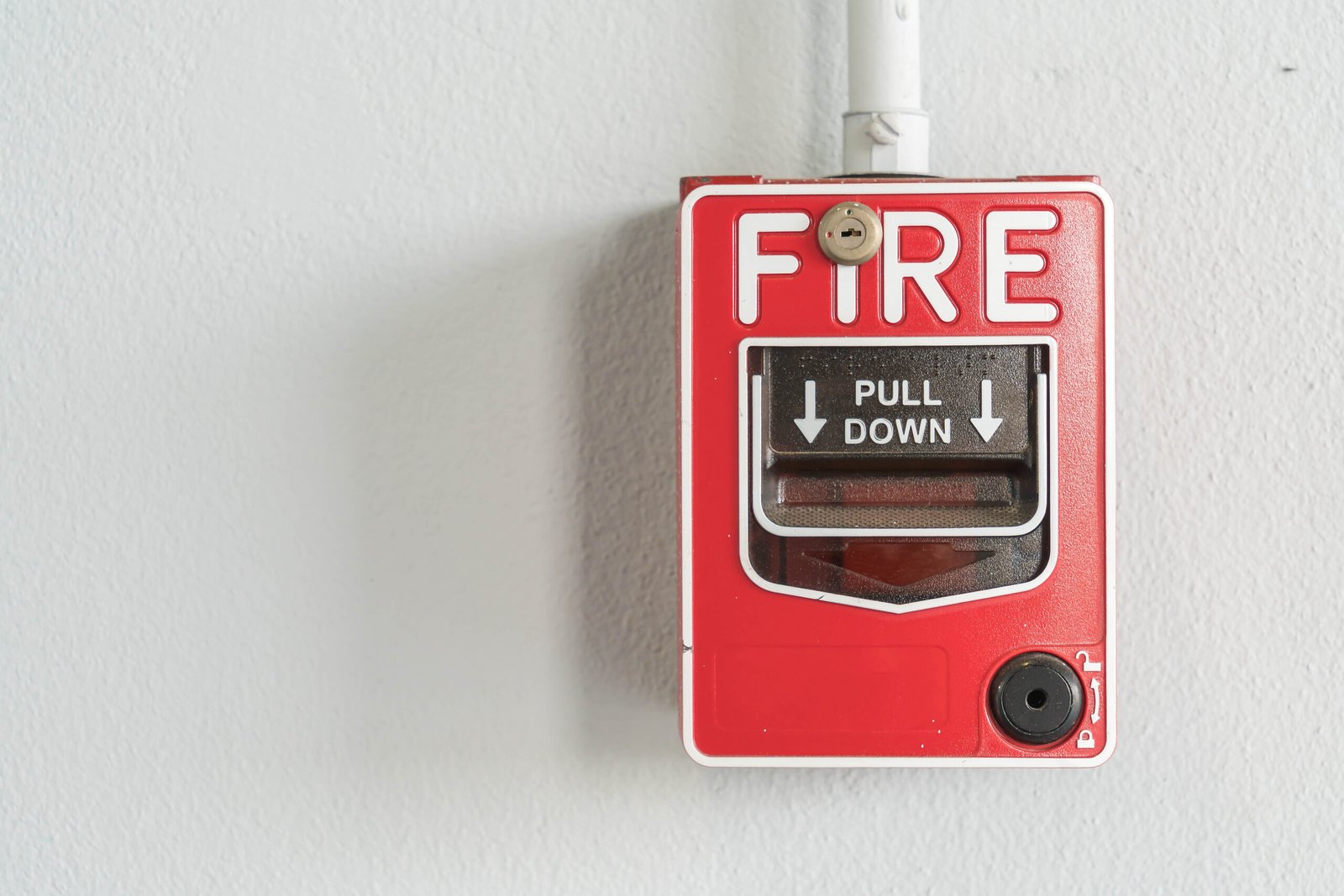
Manual pull stations — required at all exit doors and throughout larger facilities. Allow occupants to manually trigger the alarm if they see fire before detectors activate.
Notification appliances — horn/strobe combinations that alert occupants with both audible and visual signals. California requires visual notification (strobes) in addition to audible alarms to accommodate hearing-impaired occupants.
Monitoring connection — most commercial fire alarm systems are connected to a central monitoring service that notifies the Long Beach Fire Department when an alarm triggers. This is required for many occupancy types and is highly recommended for all commercial properties.
What Drives the Cost Up or Down?
Building size is the primary factor. More square footage means more detection devices, more wire, more notification appliances, and more time for installation and testing.
Ceiling height matters for both device selection and installation labor. Warehouses and industrial facilities with high ceilings require specialized detection coverage and more time to install devices safely.
Existing wiring and infrastructure — older Long Beach commercial buildings sometimes have conduit or wiring from previous alarm systems that can be reused, which reduces cost. In other cases, existing infrastructure is incompatible with modern addressable systems and needs to be replaced.
System type — conventional systems are simpler and less expensive but only identify which zone triggered an alarm. Addressable systems cost more but identify the exact device that triggered, which is required for larger facilities and strongly preferred for most commercial applications.
Special hazard areas — commercial kitchens, server rooms, paint booths, and chemical storage areas require specialized detection devices beyond standard smoke detectors. These add cost but are required by code for those occupancy types.
Monitoring service — the hardware installation cost is separate from ongoing monitoring service fees, which typically run $30–$80 per month depending on the monitoring provider and level of service.
Long Beach Fire Department Plan Review and Permitting
Commercial fire alarm installations in Long Beach require both a building permit from the City of Long Beach and plan review by the Long Beach Fire Department. This is more involved than a standard electrical permit and includes:
This process takes longer than a standard electrical permit but it’s a required and important step. A fire alarm system that hasn’t been properly permitted and accepted by the LBFD is not legally compliant — and won’t satisfy your insurance carrier or building inspector.
Karmic Electrical manages the entire permit and plan review process for commercial fire alarm projects. We prepare the required drawings, submit to both the Building Department and Fire Department, respond to any plan review comments, and coordinate the final inspection and acceptance test.
Does Your Existing Fire Alarm System Need Upgrading?
Many older Long Beach commercial buildings have fire alarm systems that are outdated, non-functional, or no longer supported by their manufacturer. Here are the clearest signs that an upgrade is needed:
A partial upgrade — replacing just the panel or just the devices — is sometimes possible depending on the existing system. In other cases, a full replacement is more cost-effective and results in a compliant, warrantied system with modern features.
How Long Does Commercial Fire Alarm Installation Take?
Timeline varies by facility size and system complexity:
Plan review by the Long Beach Fire Department adds time to the overall project timeline — typically 2 to 4 weeks for standard commercial projects. Karmic Electrical submits for plan review as early as possible in the project process to minimize delays.
Ready to Install or Upgrade Your Long Beach Business Fire Alarm?
At Karmic Electrical, commercial fire alarm projects start with a free site assessment covering your occupancy type, square footage, existing system condition, and code requirements. We provide a detailed written estimate covering the full system design, installation scope, permit process, and timeline before any work begins.
Our service call is $249 for the first hour of assessment work. For commercial fire alarm projects, the site assessment and written estimate are free.
Ready to schedule? Book directly online or call us at (562) 708-7673. Karmic Electrical serves Long Beach, Lakewood, Signal Hill, Seal Beach, Torrance, Huntington Beach, Carson, and Cerritos.


